The future demands fresh and strange ideas. —Peter Thiel, “A Time for Truth and Reconciliation”
I’ve agreed to be an editor at The Elephant. I’m interested in commissioning pieces related to AI, politics, and history (specifics listed below), and data-driven pieces on any topic. You can pitch me on Twitter @panickssery.
As a kid I was concerned that life might be a bit boring. I figured that a lifespan from roughly 1870 to 1960 was the most interesting in terms of extreme change.
Bertrand Russell (1872–1970) lost both parents (to diphtheria and bronchitis) by age four and in 1876 went to live with his grandfather, the last Whig prime minister, who as a young man had met Napoleon at Elba. At age 94 in 1966 he met Paul McCartney, whom he persuaded to oppose the Vietnam War.
Churchill (1874–1965) rode in Britain’s last great cavalry charge (Omdurman 1898) and later in life ordered Britain’s first hydrogen-bomb program.
W.E.B. Du Bois (1868–1963) was born three years after the Civil War and died the day before the March on Washington.
Some other people whose lives seem to stretch over a vast historical period include Laura Ingalls Wilder (1867–1957), Frank Lloyd Wright (1867–1959), W. Somerset Maugham (1874–1965), and Picasso (1881–1973). Outside the West there were even more extreme cases:
“Syngman Rhee (1875-1965) [was] one of the last people in Korea to pass the old Confucian civil service examinations and later became the President of South Korea, playing a pivotal role in the early Cold War … He was born in a preindustrial world where the old Confucian social order still held sway and nobody around him had ever seen a train and died in a world of jet planes and manned space travel.” @avrilbradley23
“A curious Surmic born [c. 1885] would have seen the forging of the Ethiopian Empire, the end of the witch-chiefs, Christian missionaries, the Italian conquest, literacy, new crops, and maybe the moon landing.” @Peter_Nimitz
In 1931, Churchill wrote in “Fifty Years Hence” that just as Tennyson’s predictions in his 1842 poem “Locksley Hall” of air forces and transnational governance had arrived, he forecasted
video calls: “Wireless telephones and television, following naturally upon their present path of development, would enable their owner to connect up with any room similarly installed, and hear and take part in the conversation as well as if he put his head in through the window.”
lab-grown meat: “We shall escape the absurdity of growing a whole chicken in order to eat the breast or wing.”
fusion power: “If the hydrogen atoms in a pound of water could be prevailed upon to combine together and form helium, they would suffice to drive a thousand horsepower engine for a whole year.”
artificial wombs: “They will not be made, but grown under glass.”
But in 1981, these mostly hadn’t materialized. Instead, by the 2010s it seemed that “our surroundings are strangely old,” that in the 1970s there had begun a Great Stagnation and that fertility rates would condemn us to population decline, de-industrialization, and gerontocracy as the Earth increasingly resembles a nursing home.
Now that has all changed. While international travel actually slowed down with the Concorde’s decommissioning in 2003, the FAA is moving towards eliminating the overland supersonic ban and Boom’s XB-1 broke the sound barrier last year. We’re experiencing rapid advances in space tech, automobiles, biomedicine, and most of all in AI. Who today doesn’t expect the development of lab-grown meat, fusion power, and artificial wombs, unless trends are arrested by even stranger outcomes like AI takeover or extinction? So I’m interested in commissioning pieces on how to measure and influence institutional trends especially as they relate to explosive growth.
Growth.
Equality. A century ago, about 10% of Americans died before age 5, including John D. Rockefeller’s daughter and grandson. Based on the individual variance in actual quality-adjusted consumption and in health measures like lifespan, is America the most equal society in history?
Leisure. The “unemployment rate” counts those looking for work relative to the labor force. But with a more literal “employment rate”—the percent of annual life-hours spent working—are we in an age of unprecedented leisure, given our longer educational and retirement periods?
Red tape. Would today’s institutions have thwarted the Industrial Revolution with red tape, regulatory capture, and risk aversion in the face of popular opposition? What changes can we make that would put us in a good position to capitalize on the next such episode?
Politics.
War. While not the world’s only hygiene, war (and interstate competition generally, and domestic uprising) can select for good governance. How does governance look when states are free of these insecurities—for example, if AGI falls into the hands of authoritarian governments like those in Britain or China?
Democracy. In 1981, Argentine president Viola said “We believe we are already within a democratic system. Some factors are still missing, like the expression of the people’s will.” The term democracy is often used as a synonym for “legitimacy” rather than governance that is more responsive to the mass public.
America. Over the past 150 years, America has been the best governed of the world’s large countries (say, the top 10% by population). Why? What are the key aspects of geography, culture, or governance?
AGI.
The “human touch.” What preferences for human service have survived past technological advances? How accurate were past predictions in the cases of automatic switchboards, elevator operators, self-checkout, and robotaxis?
Successionism. In a YouGov poll from July, 8% of Americans think some AIs are conscious and another 37% say they probably will be eventually; 54% said they wouldn’t give AIs rights even if they were conscious, but is that position sustainable among the public? Can technical decisions by frontier labs influence the policy outcomes here?
Effective altruists. How did a few thousand effective altruists gain such wealth and influence? What are historical analogues of a small, ideological, elite-oriented movement like the Jesuits, Fabian Society, or Quakers?
Taxation. The labor share of income has been roughly constant despite technological changes (one of the six Kaldor facts), but if that changes, how might we change taxation in a way that doesn’t throttle output?
Data centers. In this week’s midterm elections, voters passed 43 out of 44 restrictive measures on data centers. Where will data centers ultimately be built, and how?
Demographics.
Boomers. How do we measure boomer influence—such as with the composition over time of important positions like congressmen and university presidents—and how do we forecast the handover of power as they retire?
India. Over 1.1 billion Indians could emigrate to Europe and North America until they became the majority in both continents and India would still the world’s third most populous country. A few changes of fate could have seen a simultaneous American president and British prime minister of Indian ancestry.
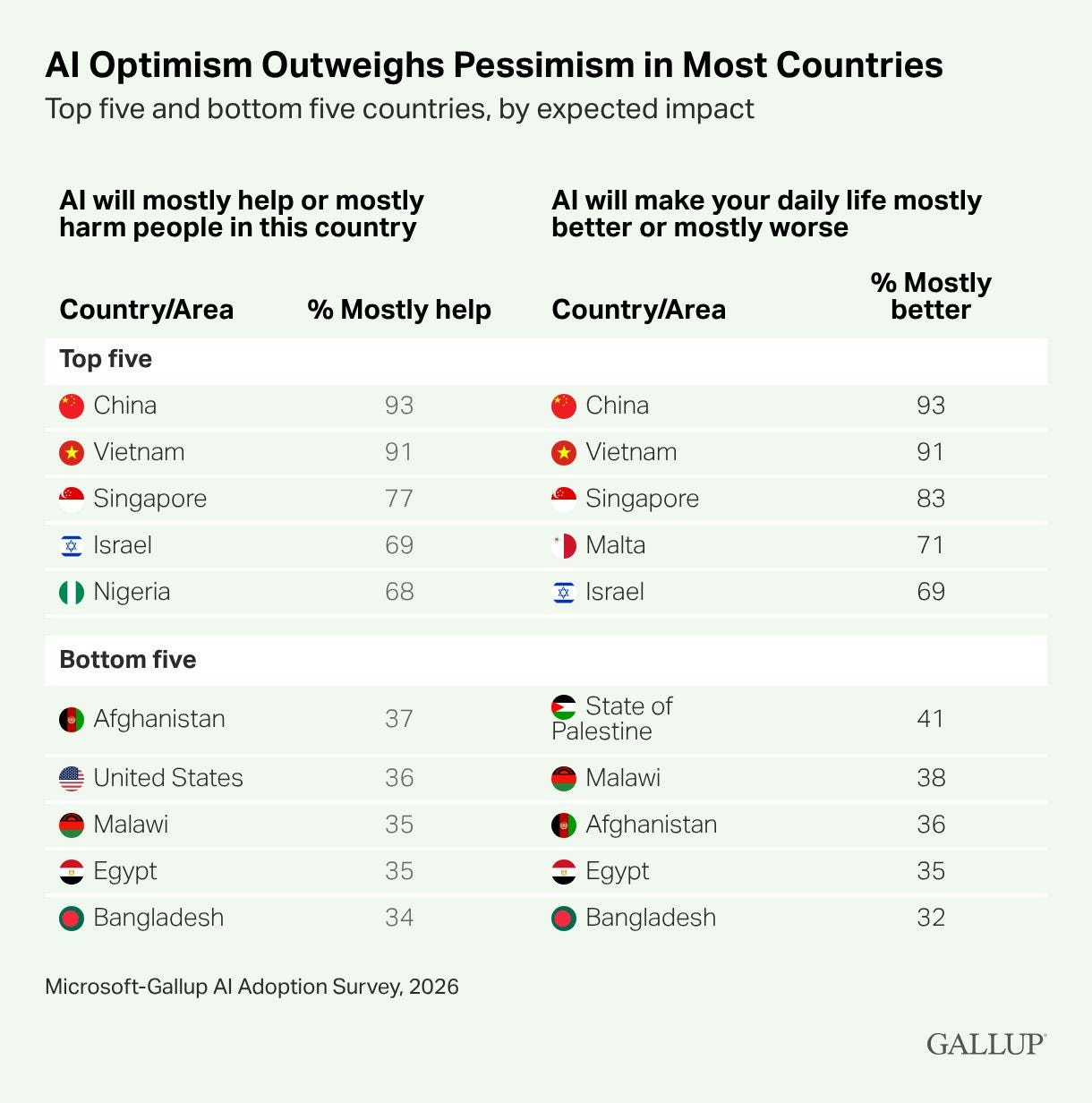
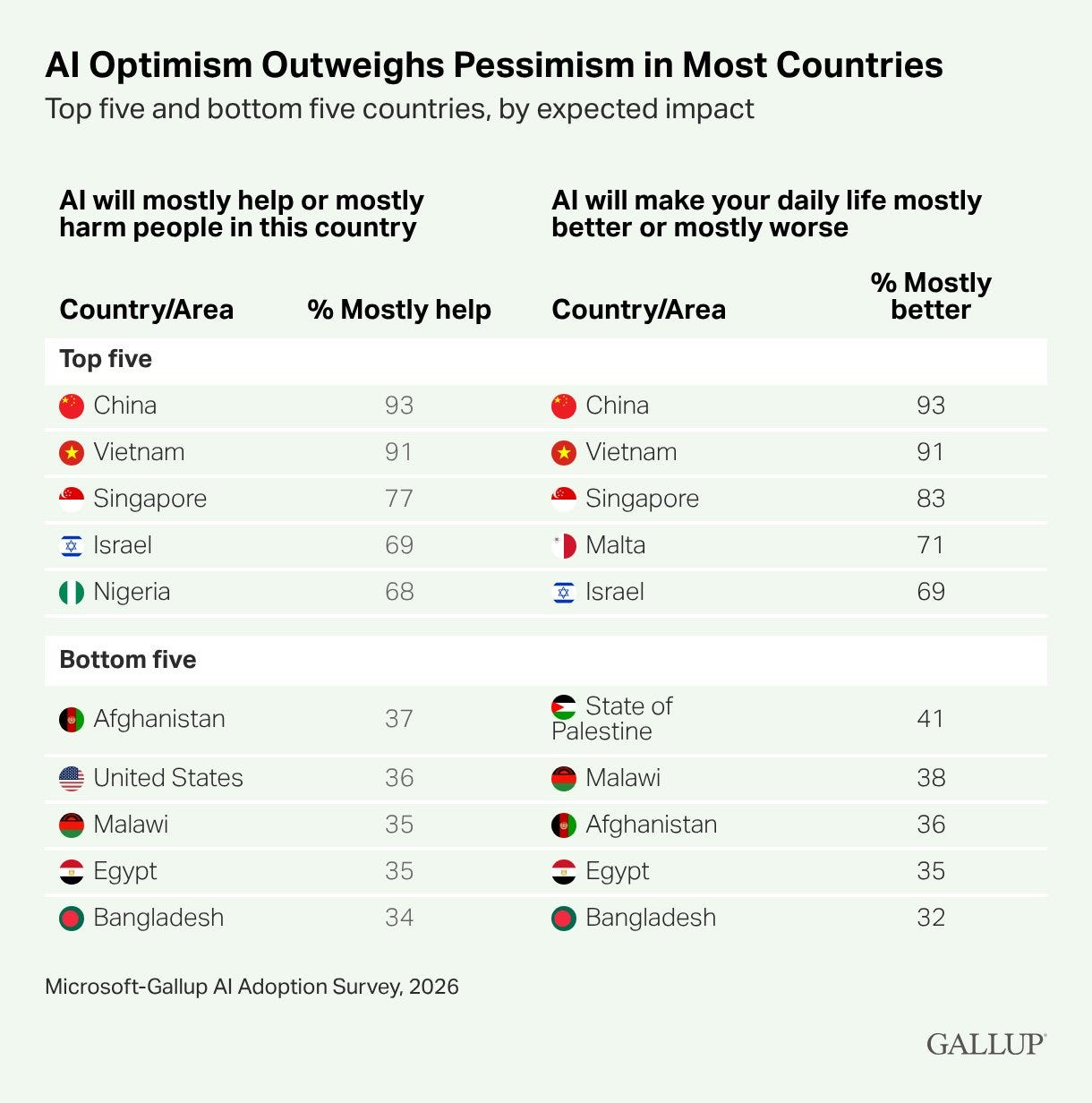
China. As de Gaulle apocryphally said, “China is a big country, inhabited by many Chinese.” China also has one of the lowest percentages of foreign-born residents of any country, even as historically closed countries like Japan increasingly accept immigrant workers. What will this look like in the future? And what are the implications of China’s extreme AI optimism if American policy turns against AI?
Fertility. What were the causes of the Roman fertility collapse and the government response? What is Japan like now that it has gone from a poster child of fertility decline to actually having a higher TFR than its neighbors?
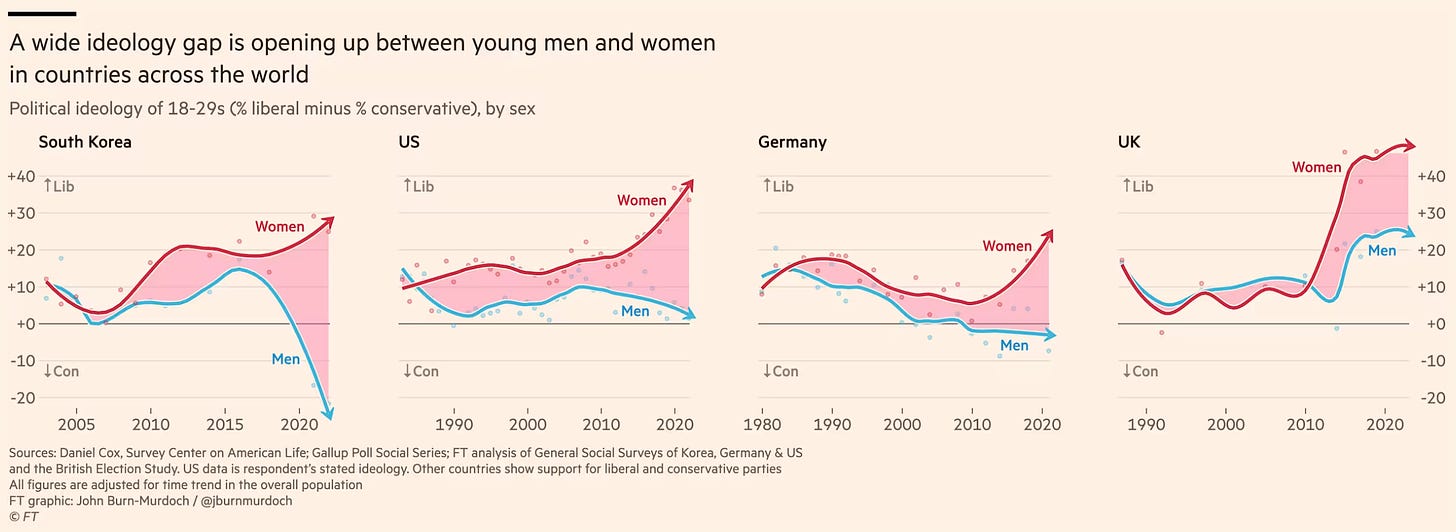
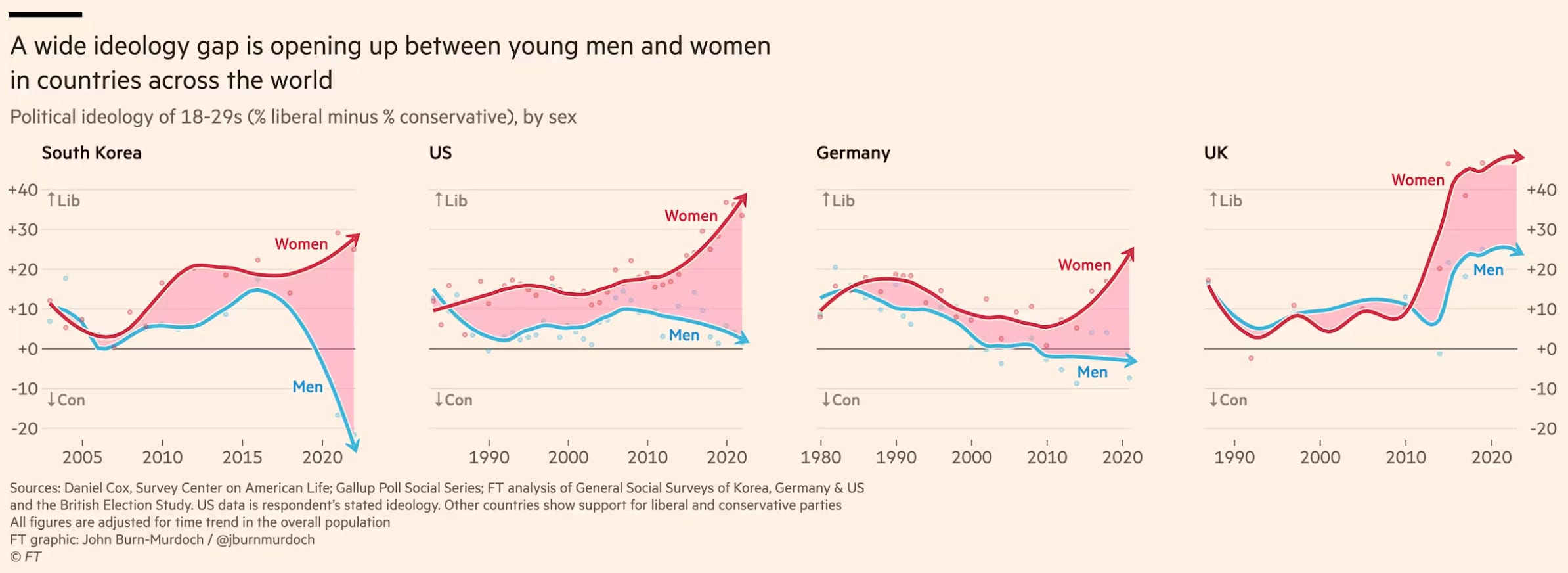
Gender. How and why have young women moved radically toward the left in many Western countries? What is the longer historical trend and narrative for gender polarization in politics?